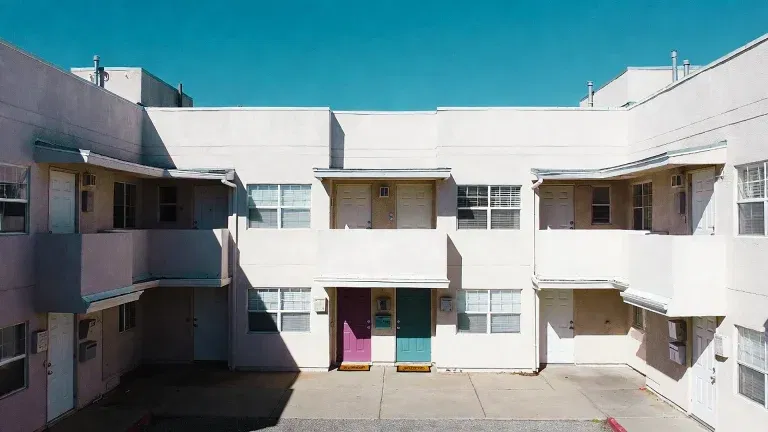
If you own rental property in Alameda, you're operating under one of the most heavily regulated housing frameworks in California. The city's Alameda Rent Ordinance (AMC Chapter VI, Article XV) controls how much you can raise rent, when you can remove a tenant, what you owe them if you do, and exactly how you report all of it to the city each year.
Miss a deadline? You lose the right to raise rent at all. Serve the wrong form? Your eviction could get thrown out. Skip your annual registration? Late fees start compounding at 10% per unit, per month.
SLPM Property Management has worked with East Bay landlords since 1978, and we've helped property owners in Alameda stay on the right side of these rules for years. This guide breaks down the current requirements so you know exactly where you stand.

Is Your Alameda Rental Fully or Partially Regulated?
The first thing you need to know is how the city classifies your property. That classification determines which rules apply to you, including whether Alameda can cap your rent increases.
Fully Regulated
Subject to the entire Alameda Rent Ordinance: annual rent caps, just-cause eviction protections, mandatory program fees, and full registry requirements.
Your property falls here if it's a multi-unit building (two or more units on a single legal lot) with a certificate of occupancy issued before February 1, 1995. That includes duplexes, even if you live in one of the units yourself.
Partially Regulated
Shielded from the city's local rent cap by the Costa-Hawkins Rental Housing Act (Civil Code 1954.50-1954.535), but you still need to register the property, pay annual program fees, and follow Alameda's just-cause eviction rules.
Covers single-family homes, individually owned condos, post-1995 construction, and ADUs.
Exempt
Hospital rooms, dormitories, Housing Authority units, and genuine short-term rentals of 30 consecutive days or fewer. This category is narrow.
Warning: The moment a short-term occupancy crosses that 30-day line, your guest becomes a tenant with full ordinance protections. No grace period.
How Much Can You Raise Rent in Alameda?
If your property is fully regulated, the Annual General Adjustment (AGA) sets your ceiling. The AGA is calculated at 70% of the regional Consumer Price Index change, with a floor of 1.0% and a cap of 5.0%.
For September 1, 2025, through August 31, 2026, the AGA is 1.0%, the lowest the ordinance allows. On a $2,500/month unit, that's a $25 increase for the entire year.
Banking Unused Increases
The city allows you to "bank" unused portions of the AGA from prior years. If you didn't raise rent by the full allowable amount previously, you can apply that banked increase later. But there are hard limits: you can never accumulate more than 8.0% in total, and when you use banked increases, the combined amount can't exceed the current AGA plus 3.0%.
So even with aggressive banking, the most you could raise rent in a single year on a fully regulated unit right now is 4.0%.
Partially regulated properties (single-family homes, condos, post-1995 construction) aren't subject to the local AGA. The statewide cap under AB 1482, the Tenant Protection Act (Civil Code 1947.12) applies instead.
That limit is currently 6.3% for August 1, 2025, through July 31, 2026, per the City of Alameda's AB 1482 FAQ page.
What Is the Alameda Rent Registry, and What Does It Cost?
The City of Alameda runs an Online Rent Registry that tracks every regulated rental unit in the city. If you own rental property in Alameda, you're required to file an annual registration statement with specific property details, current rent amounts, and tenancy information. This isn't optional, and the data is submitted under penalty of perjury.
The annual deadline for both registration and fee payment is August 31.
| Unit Type | Annual Fee (2025-2026) |
|---|---|
| Fully Regulated Units | $170 per unit |
| Partially Regulated Units | $114 per unit |
| Rent-Subsidized (Section 8) | $0 (requires Form RP-221(D)) |
You can recover up to 50% of the fee from your tenants, but only if you split the tenant's share into 12 equal monthly installments added to rent. There's no option to pass the full amount through in a single payment.
Non-compliance penalties are steep. If your registration or payment is incomplete after August 31, the city classifies you as being in "substantial non-compliance." You lose the legal right to raise rent at all, you're barred from filing Fair Return petitions, and late fees hit at 10% per unit per month, compounding up to a 60% maximum.
On a 10-unit building at $170 per unit, that's $1,700 in base fees that could balloon to $2,720 in penalties alone. It only takes one missed year to turn a manageable expense into a serious financial hit. SLPM's financial management and accounting services track these deadlines automatically so nothing falls through the cracks.
What Are the Eviction Rules in Alameda?
Alameda's just-cause eviction requirements go beyond California's state baseline. You cannot terminate a tenancy without one of the city's recognized grounds, period.
At-fault evictions (where the tenant has done something wrong) include non-payment of rent, material lease violations, and creating a nuisance. These don't require relocation payments, though the eviction process itself still needs to follow specific notice requirements under both local and state law.
No-fault evictions are where the costs get serious. If you're removing a tenant for reasons that aren't the tenant's fault (owner move-in, Ellis Act withdrawal, compliance with a government order), you owe mandatory Permanent Relocation Payments. These are not negotiable, and the amounts adjust annually based on CPI.
Half of the payment is due when the tenant confirms they'll vacate. The other half is due within three business days after they've moved out and removed their belongings. For temporary displacement situations (a government "red tag" or Capital Improvement Plan), you owe per-diem payments covering hotel and meal costs for the first 60 days. After 60 days, the calculation shifts to a monthly rent differential based on Fair Market Rent.
Permanent Relocation Payments (July 1, 2025)
| Unit Size | Base | Qualified Household |
|---|---|---|
| Studio | $6,604 | $8,534 |
| 1 Bedroom | $7,417 | $9,756 |
| 2 Bedrooms | $8,568 | $11,448 |
| 3 Bedrooms | $10,759 | $14,767 |
| 4+ Bedrooms | $12,572 | $17,489 |
Source: City of Alameda Rent Program. "Qualified Household" = at least one occupant who is 62+, has a disability, or is a child under 18.
Can Alameda Still Force Relocation Payments on Lawful Rent Increases?
No. And this is the biggest recent win for landlords with exempt or partially regulated properties in Alameda.
Here's what changed: before late 2025, if you owned a single-family home or other exempt property in Alameda and raised rent by more than 10%, and the tenant chose to move out, the city treated it as a forced eviction. That triggered the full Permanent Relocation Payment, even though the tenant left voluntarily after a perfectly legal rent increase.
On December 18, 2025, the California Court of Appeal ruled in California Apartment Association v. City of Pasadena that cities cannot require relocation payments when tenants voluntarily leave after a lawful rent increase on units exempt from local rent control. The court found that this type of mandate conflicts with the Costa-Hawkins Rental Housing Act.
Following that ruling, the City of Alameda published a regulatory update on December 22, 2025, confirming it will no longer enforce the relocation rent increase penalty for exempt and partially regulated units.
Important caveat: The California Apartment Association is currently defending this ruling at the California Supreme Court level. Pasadena and tenant advocacy groups have petitioned for review, and as of February 2026, the Supreme Court has not yet decided whether to take up the case. The appellate ruling stands for now, but landlords should monitor this closely. A Supreme Court reversal could reinstate the old enforcement approach.
For landlords with exempt properties in Alameda, this means you can currently raise rent to market rates without the risk of triggering a five-figure relocation bill, as long as your increase complies with AB 1482 limits where applicable. If you're unsure whether your property qualifies, SLPM's leasing and marketing team can evaluate your specific situation and make sure any rent adjustment follows both state and local requirements.
What Forms and Disclosures Does Alameda Require?
Two Alameda-specific disclosure requirements trip up landlords regularly. Both are easy to complete but carry serious consequences if you skip them.
Form RP-208: New Tenancy Disclosure
Every time you sign a new tenant, you're legally required to provide them with Form RP-208 before or at the start of the tenancy. This form details the tenant's rights under Alameda's rent ordinance, including rent increase limits, just-cause eviction protections, and how to contact the city's Rent Program.
If you skip this step, or serve it late, the city can invalidate later administrative actions or eviction proceedings tied to that tenancy. Courts have rejected eviction filings where landlords couldn't prove timely delivery of RP-208.
It costs nothing to complete and takes about five minutes. But failing to do it can undermine months of legal work and thousands of dollars in attorney fees down the road. SLPM builds RP-208 delivery into every new lease signing automatically.
Form RP-205: Buyout Agreement Disclosure
If you want to offer a tenant cash to voluntarily vacate (a buyout), you must serve Form RP-205 before the tenant signs anything. The form explains their rights in the buyout process, including their right to consult an attorney and their right to refuse the offer entirely without retaliation.
And here's the part most landlords don't see coming: even after a tenant signs a buyout agreement, they have an absolute, non-waivable 30-day cooling-off period to change their mind. The tenant can rescind the deal within those 30 days, no questions asked.
You can't contract around this requirement, and no amount of legal language in the buyout agreement can shorten or eliminate the rescission window. SLPM's complete property management services handle buyout coordination and disclosure compliance from start to finish.
Frequently Asked Questions
For fully regulated properties (multi-unit buildings built before February 1, 1995), the Annual General Adjustment is 1.0% for September 1, 2025, through August 31, 2026. Partially regulated properties follow the statewide AB 1482 cap, which is currently 6.3%.
The deadline for annual registration and program fee payment is August 31 each year. Missing this deadline puts you in "substantial non-compliance," which blocks your ability to raise rent and triggers late fees of 10% per unit per month, up to a 60% maximum penalty.
Permanent Relocation Payments in Alameda range from $6,604 (studio, base amount) to $17,489 (4+ bedroom, qualified tenant household) as of July 1, 2025. Qualified households include tenants who are seniors (62+), have a disability, or have minor children.
As of December 2025, no. Following the California Court of Appeal's ruling in California Apartment Association v. City of Pasadena, Alameda confirmed it will no longer enforce relocation payments triggered by lawful rent increases on exempt or partially regulated properties. This ruling is currently being challenged at the California Supreme Court, so landlords should stay informed.
A partially regulated property is one that's exempt from Alameda's local rent cap under the Costa-Hawkins Act but still subject to annual registration, program fees, and just-cause eviction protections. This includes single-family homes, condos, post-February 1995 construction, and ADUs.
Stop Guessing About Alameda Compliance
One missed deadline or one wrong form can cost you thousands in penalties or blow up an eviction case. SLPM handles rent registry filings, rent increase calculations, tenant disclosures, and relocation payment compliance so you don't have to track it yourself.
No obligation. Same-day response guaranteed. A+ BBB rated since 2004. CA DRE #02016432.